About Memory Filming
Twenty-five years of
South Asian weddings.
9,700 weddings and one guiding idea: know each moment so well that we are never the reason it was missed. Now filming for couples across the USA.
Memory Filming began in 2000 with a borrowed camera and a notebook. What our founder, Khurram Iftikhar, brought from those early days into weddings was a habit more than a style: anticipate what a moment is about to do, and be ready before it happens.
Twenty-five years later, that habit has carried us through 9,700 weddings: nikkahs and walimas, Anand Karaj ceremonies in gurdwaras, Hindu ceremonies around the sacred fire, Gaye Holud mornings in family homes, and Tamil ceremonies where everything turns on the tying of the thaali.
Now we bring that experience to couples in the US. The team flies in for your wedding weekend, works alongside your planner and venues, and covers every event from the first mehndi to the last dance.
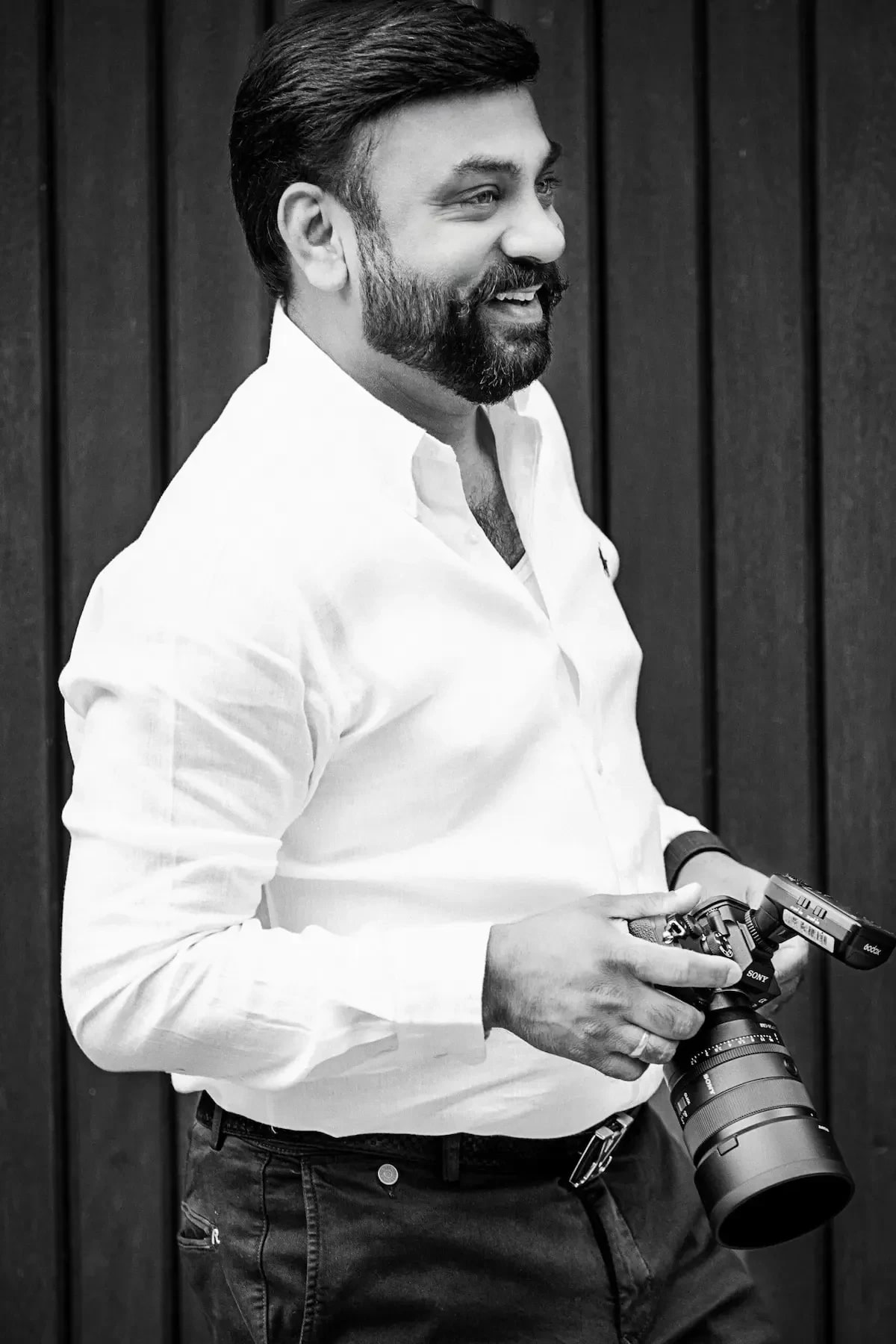
Khurram Iftikhar · Founder, Memory Filming
The founder
A cousin noticed first.His father taught him everything else.
Khurram never planned to become a photographer. In 2000 a cousin saw that he had an eye for pictures and steered him toward a camera, which happened to be his father's. His father photographed as a hobby, and he became Khurram's only teacher, starting with how a camera works and moving on to everything after the shutter: developing, printing, drying and assembling albums by hand.
He learned on 35mm film, where a roll had to be finished and then sat at the lab for days. With no screen to check, he kept a notebook of every frame, the settings he used and what he expected to see. When the prints came back, he compared them to his notes and figured out where he had gone wrong.
There were no online tutorials or courses to lean on. He gave himself problems to solve and worked at them until the image matched the one in his head. A quarter of a century later, he still says every wedding teaches him something new.
Weddings became his focus, and he finds them calming, which surprises people. Most couples have never done this before and have no idea where to stand or what to do with their hands. His favorite part is taking that worry away and guiding them through the day, so they get to enjoy their own wedding instead of managing it.
He thinks that is why couples keep recommending him. Styles in wedding photography change every few years, but what he learned on film, where every wasted frame cost money, was about getting it right rather than following a trend. Couples he photographed twenty years ago still love their albums, and that is the only test he cares about.
The rest he learned in the rooms themselves. He studied the traditions as well as the shot lists: not just how to film a nikkah, but what the words of acceptance mean; not just where to stand during the Anand Karaj, but why the laavan unfold the way they do. None of those moments can be staged a second time, and the studio grew because couples told each other that this team already knew their traditions.
Twenty-five years, counted
- 25Years filming weddingssince 2000
- 9,700Weddings filmedMuslim, Sikh, Hindu & more
- 4.9Google ratingfrom 187 reviews
- 1Team for every eventmehndi to reception
How we work
Three things, every time.
- 01
We already know the ceremony
Our work is built around South Asian traditions specifically. Before we land, we already know the order of service, the moments that cannot be repeated and the etiquette of the room, because we have filmed your kind of ceremony many times before.
See how we film your ceremony - 02
Present without intruding
The nikkah's acceptance, the four laavan, the pheras, the mangalsutra or thaali: each happens once. We choose our positions in advance so we catch those moments without blocking a single guest's view or asking anyone to repeat them.
- 03
Planned around your weekend
We start with a conversation about your family, your events and what matters most to you. That tells us where to stand, which relatives must not be missed and how to staff each day of a multi-day celebration.
Tell us about your wedding
What drives us
What we will not compromise.
Depth over breadth
We focus on the traditions we know inside and out rather than claiming to film everything.
Quiet on the day
We are there to record your wedding, not to perform at it. You should barely notice us.
Ask, never assume
Every family does things a little differently, so we check before we decide.
Built to last
Modern equipment, classic storytelling. Your film should still feel right in twenty years.
From first call to final film.
Everything that happens between your first message and the film you keep.
- 01Months ahead
First call
A video call at a time that suits you in the US. We go through your events, your family and your priorities, explain coverage and delivery times, and hold your date.
- 02Before you fly
Planning
We check each venue's rules on cameras, coordinate with your planner and other vendors, and build a shot list around your traditions and the people who matter most.
- 03Your wedding weekend
Coverage
The team arrives ahead of your first event to scout light and positions, then covers every event as one crew, staying a step ahead of each moment.
- 044–6 weeks after
Editing
We shape the story, color grade every frame to a consistent look, cut to your music and refine the film with a round or two of your feedback.
- 05Delivery
Yours to keep
Delivered by secure download, with a USB drive on request, and backed up. The files are yours to watch, share and pass down.
See for yourself.
No two couples are alike, so no two of our films are either.
The next step
Planning a weddingin the US?
A team that knows your traditions, respects your moments and travels to wherever your wedding is. If that sounds right, let's talk.